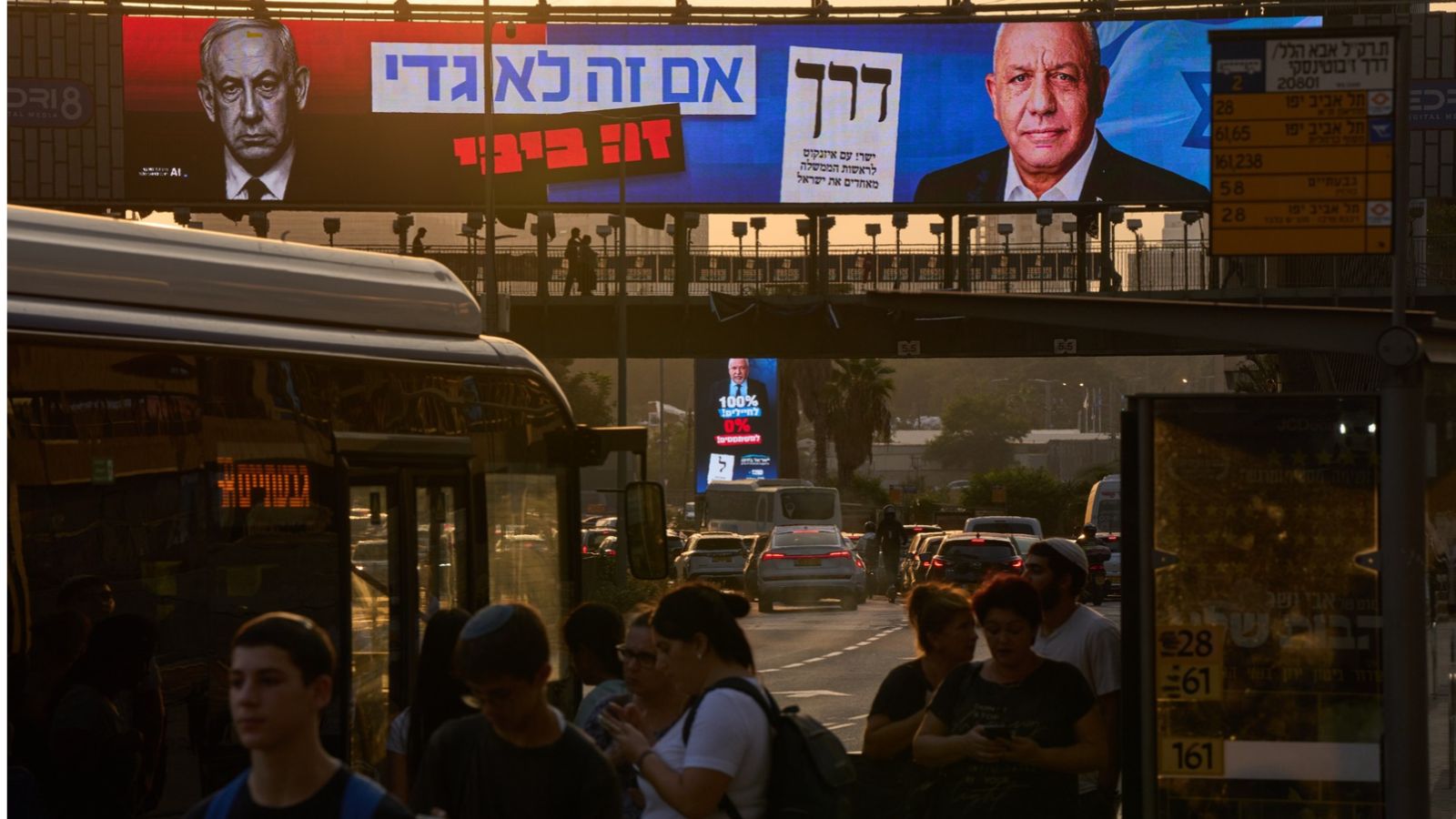
Israel's opposition leaders have thrown their support behind former army chief Gadi Eisenkot as their candidate to replace Prime Minister Benjamin Netanyahu, according to The Indian Express, but no bloc emerged from the October 27 election with the 61 seats required for a majority in the 120-member Knesset.
Netanyahu's right-wing bloc took 53 seats, while the opposition alliance headed by Eisenkot won 48. The two Arab-led lists, the Joint List and Ra'am, together hold the remaining 19 seats, putting them in a position to influence which side can assemble a governing majority.
Why it matters
The arithmetic leaves both camps short of the threshold and hands decisive leverage to parties that have historically stayed outside government. How the opposition handles that opening — and whether it can hold together long enough to present a credible alternative — will determine whether Netanyahu extends his time in office or becomes the first leader in years to be unseated by a rival bloc.
The standoff also carries weight beyond Israel's borders. Netanyahu has ruled out partnering with parties he accuses of supporting terrorism, a stance that narrows his own path to a majority while hardening the lines between the two camps. The Indian Express reports that opposition leaders have committed to installing a national emergency government, a framing that suggests they intend to present their coalition as a wartime arrangement rather than an ordinary political swap.
A divided opposition with one name in common
Agreement on Eisenkot as candidate does not mean agreement on how to get him there. The Indian Express reports that opposition leaders remain split over whether to bring in the Arab-led lists or the ultra-Orthodox parties Shas and United Torah Judaism. Those are very different partners with very different demands, and choosing one route complicates the other.
The Arab parties' willingness to back Eisenkot has drawn particular attention, with Al Jazeera reporting on their support in the context of the coalition negotiations. NDTV reported that the opposition has settled on Eisenkot under the banner of removing Netanyahu from office. CGTN reported that opposition leaders have vowed to remove the prime minister quickly, while acknowledging the open question of how that would be achieved.
That question is not rhetorical. A majority built with Arab-led parties would rest on support from outside the traditional governing camp, and the ultra-Orthodox parties represent a separate and long-established channel of Israeli coalition politics. The opposition's internal debate is essentially about which of those two doors to walk through, and whether either can be opened without closing the other.
What the numbers leave open
The seat totals explain the deadlock plainly. Fifty-three for the right-wing bloc and 48 for the Eisenkot-led alliance leave both sides dependent on the 19 seats held by the Joint List and Ra'am. Neither camp can govern alone, and neither can afford to treat the Arab-led parties as irrelevant.
Netanyahu's refusal to work with parties he accuses of supporting terrorism effectively removes one possible route to a majority for the incumbent. It also raises the stakes for the opposition: if it can convert Arab-led support into a working coalition, it will have done something the right-wing bloc has explicitly ruled out.
The source reporting does not specify the policy terms either side has discussed, and no agreements have been described publicly. What is known is the shape of the problem — a parliament split roughly down the middle, with a small group of members holding the balance.
The procedural clock
Official results are due to be certified on Wednesday, according to The Indian Express. Once that happens, President Isaac Herzog will begin consultations with party leaders to decide who should receive the first opportunity to form a government. That decision is consequential: the first candidate to be tasked gets the opening move, and the sequence of mandates can shape whether a coalition comes together quickly or the country heads toward another election.
The new Knesset is scheduled to be sworn in on November 10, setting a firm date on the calendar and starting the formal countdown on coalition-building.
The coming days will show whether the opposition's shared preference for Eisenkot translates into a shared plan for reaching 61 seats — or whether the divisions over the Arab-led lists and the ultra-Orthodox parties prove harder to bridge than the agreement to oppose Netanyahu.